- Introduction
- 1. Understanding Virtual Reality (VR) and Augmented Reality (AR)
- 1.1 What is Virtual Reality (VR)?
- 1.2 What is Augmented Reality (AR)?
- 2. Key Differences Between VR and AR
- 3. Current Applications of VR and AR
- 3.1 Gaming and Entertainment
- 3.2 Education and Training
- 3.3 Healthcare
- 3.4 Retail and E-Commerce
- 3.5 Industrial and Military Uses
- 4. The Future of VR and AR: Trends and Innovations
- 4.1 AI-Driven Enhancements
- 4.2 Wearable Technology and Smart Glasses
- 4.3 5G and Cloud-Based VR/AR
- 4.4 The Metaverse and Beyond
- 5. Challenges and Limitations of VR and AR
Conclusion: Which Technology Will Dominate?
Introduction
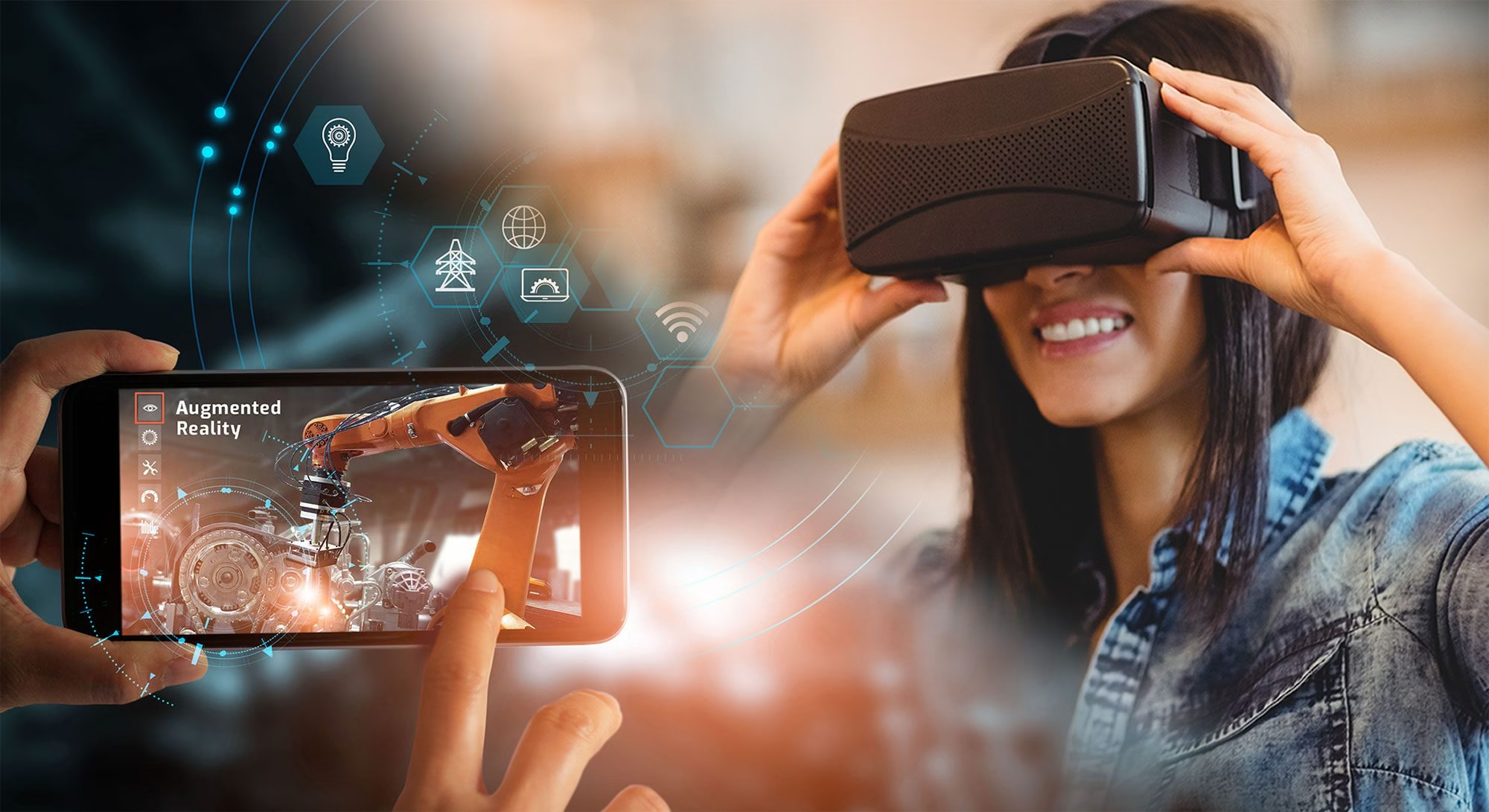
Virtual Reality (VR) and Augmented Reality (AR) are transforming the way we interact with digital content. While VR immerses users in a completely virtual environment, AR overlays digital information onto the real world. This article explores the differences, current applications, and the future of these technologies.
1. Understanding Virtual Reality (VR) and Augmented Reality (AR)
1.1 What is Virtual Reality (VR)?
VR is a fully immersive experience where users interact with a simulated digital environment using:
- VR headsets (e.g., Oculus, HTC Vive, PlayStation VR).
- Motion controllers for interactive experiences.
- Haptic feedback devices for a realistic touch sensation.
1.2 What is Augmented Reality (AR)?
AR enhances the real world by overlaying digital objects, using:
- Smartphones and tablets (e.g., Pokémon GO, AR filters).
- AR glasses (e.g., Microsoft HoloLens, Google Glass).
- Mixed Reality (MR) for deeper interaction between real and virtual elements.
2. Key Differences Between VR and AR
| Feature | Virtual Reality (VR) | Augmented Reality (AR) |
| Immersion | Fully immersive | Enhances real world |
| Hardware | Requires VR headset | Uses smartphones, glasses |
| Interaction | Virtual environment only | Real-world interaction |
| Use Cases | Gaming, simulations, education | Retail, healthcare, navigation |
3. Current Applications of VR and AR
3.1 Gaming and Entertainment
- VR: Immersive gaming experiences like Half-Life: Alyx and Beat Saber.
- AR: Mobile AR games like Pokémon GO and Snapchat filters.
3.2 Education and Training
- VR: Virtual classrooms, flight simulators, and medical training.
- AR: Interactive learning apps and real-time annotations for technical training.
3.3 Healthcare
- VR: Pain management, therapy, and surgery simulations.
- AR: Real-time guidance for surgeries and patient diagnostics.
3.4 Retail and E-Commerce
- VR: Virtual showrooms and product trials.
- AR: AR fitting rooms and furniture placement apps.
3.5 Industrial and Military Uses
- VR: Military training, hazardous environment simulations.
- AR: Maintenance assistance, navigation overlays for soldiers.
4. The Future of VR and AR: Trends and Innovations
4.1 AI-Driven Enhancements
- AI-powered avatars and environments.
- Personalized virtual experiences.
4.2 Wearable Technology and Smart Glasses
- Lighter, more comfortable AR/VR headsets.
- Smart glasses with real-time translation and navigation.
4.3 5G and Cloud-Based VR/AR
- Low-latency streaming for high-quality experiences.
- Cloud processing for seamless AR/VR applications.
4.4 The Metaverse and Beyond
- Integration of VR and AR into metaverse platforms.
- Virtual workplaces and social interactions.
5. Challenges and Limitations of VR and AR
| Challenge | VR | AR |
| Hardware Cost | Expensive headsets | Limited AR glasses availability |
| Accessibility | Requires high-end PCs/consoles | Smartphone-dependent |
| Motion Sickness | Common issue in VR | Less prevalent in AR |
| Privacy Concerns | Data tracking in virtual spaces | Real-world data collection risks |
Conclusion: Which Technology Will Dominate?
While VR is leading in gaming and simulations, AR is making strides in practical applications such as retail, healthcare, and navigation. The future may see an integration of both technologies, shaping the way we interact with the digital and physical world.