- Introduction
- 1. The Evolution of Smart Homes
- 2. Key Technologies in AI-Powered Smart Homes
- 2.1 Artificial Intelligence and Machine Learning
- 2.2 Internet of Things (IoT) and Connectivity
- 2.3 Smart Security Systems
- 2.4 Energy Efficiency and Smart Grids
- 2.5 Voice and Gesture Control
- 3. Applications of Smart Home Technology
- 3.1 AI-Powered Home Assistants
- 3.2 Smart Kitchens and Appliances
- 3.3 Automated Climate Control
- 3.4 Health and Wellness Monitoring
- 4. The Role of 5G in Smart Homes
- 5. Privacy and Security Concerns in AI-Driven Homes
- 6. Future Trends in Smart Home Technology
Conclusion
Introduction
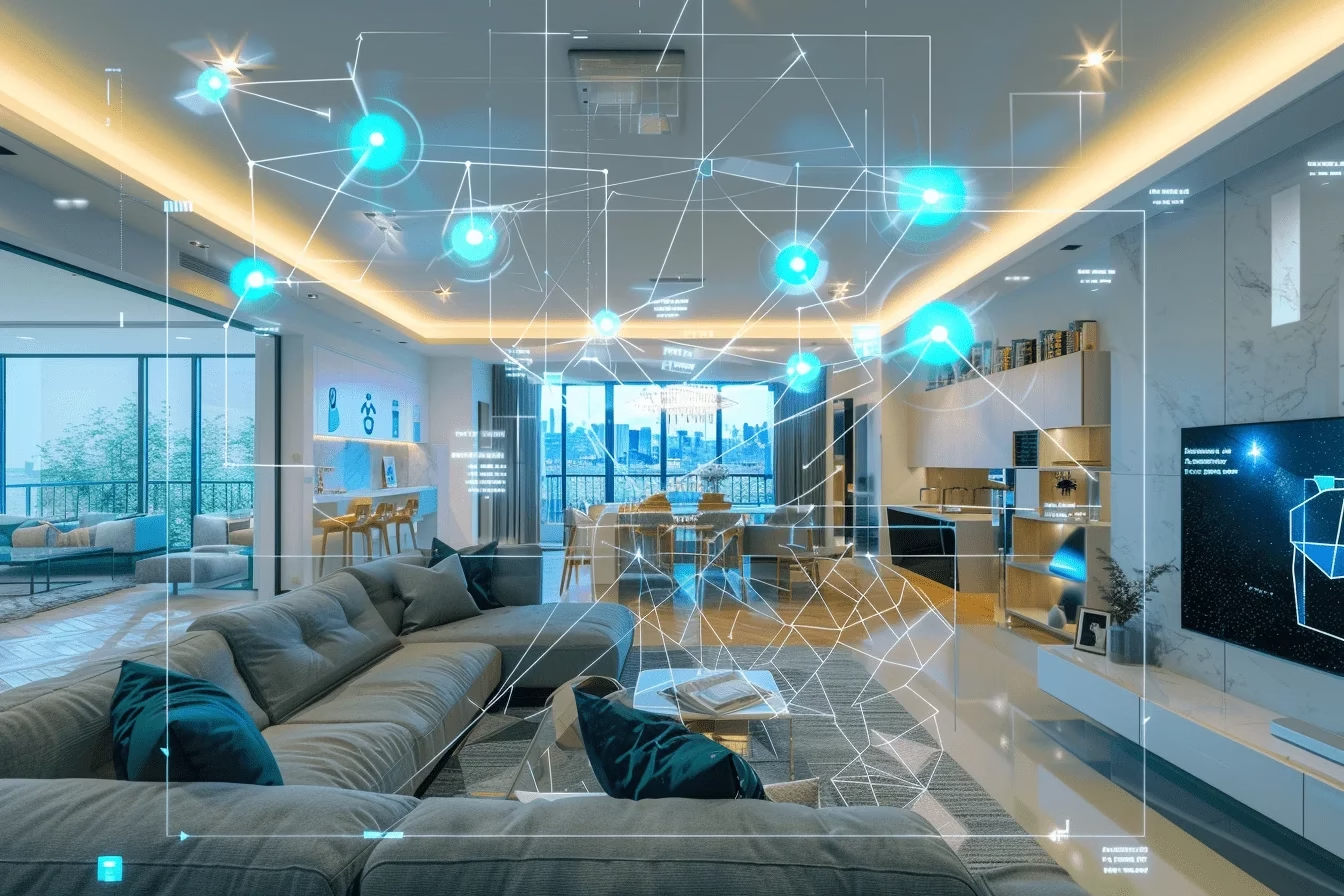
The concept of smart homes has evolved significantly with the rise of AI and IoT. In 2025, homes are expected to be fully automated, energy-efficient, and capable of learning user preferences. This article explores how AI-powered technology is reshaping modern living spaces.
1. The Evolution of Smart Homes
Smart home technology has transitioned from basic automation to fully integrated AI-driven ecosystems. Early automation focused on simple remote control features, while today’s advancements leverage AI to provide personalized and predictive experiences.
2. Key Technologies in AI-Powered Smart Homes
2.1 Artificial Intelligence and Machine Learning
- AI-powered systems learn user habits to automate home functions.
- Predictive analytics for optimizing energy consumption.
2.2 Internet of Things (IoT) and Connectivity
- IoT-enabled devices communicate seamlessly for better control.
- Integration with cloud-based platforms for remote access.
2.3 Smart Security Systems
- AI-driven surveillance cameras with facial recognition.
- Smart locks and real-time security alerts.
2.4 Energy Efficiency and Smart Grids
- AI-optimized lighting and climate control.
- Smart meters that adjust energy usage in real-time.
2.5 Voice and Gesture Control
- AI-powered voice assistants (Alexa, Google Assistant, Siri).
- Gesture-based controls for appliances and home systems.
3. Applications of Smart Home Technology
3.1 AI-Powered Home Assistants
- Personalized home automation based on daily routines.
- AI integration with calendars, reminders, and scheduling.
3.2 Smart Kitchens and Appliances
- AI-driven refrigerators that track food expiry.
- Automated coffee makers and cooking assistants.
3.3 Automated Climate Control
- AI-based thermostats like Nest learning user preferences.
- Smart windows adjusting opacity based on sunlight.
3.4 Health and Wellness Monitoring
- Wearable tech integration for health tracking.
- AI-assisted home fitness systems and sleep monitoring.
4. The Role of 5G in Smart Homes
| Feature | Impact on Smart Homes |
| Faster Connectivity | Real-time data processing for AI functions |
| Low Latency | Immediate response to user commands |
| Improved IoT Performance | Seamless communication between devices |
5. Privacy and Security Concerns in AI-Driven Homes
- Data collection and privacy risks.
- Potential cybersecurity threats in connected devices.
- AI-driven solutions for real-time threat detection.
6. Future Trends in Smart Home Technology
- AI-driven robotic assistants.
- Blockchain technology for enhanced security.
- Hyper-personalized home automation.
Conclusion
Smart homes in 2025 will be more intuitive, secure, and energy-efficient, thanks to AI and IoT. With 5G enabling seamless connectivity and AI-powered systems optimizing every aspect of daily life, smart living spaces are set to redefine modern homes.