- Introduction
- 1. Understanding Autonomous Driving Technology
- 1.1 Levels of Autonomous Driving
- 1.2 Core Technologies Behind Self-Driving Cars
- 1.3 AI and Machine Learning in Autonomous Vehicles
- 2. Current State of Self-Driving Cars in 2025
- 2.1 Leading Companies in Autonomous Vehicle Development
- 2.2 Real-World Deployments and Testing
- 2.3 Challenges and Limitations
- 3. Key Technologies Enabling Full Automation
- 3.1 LIDAR, Radar, and Computer Vision
- 3.2 Advanced Driver Assistance Systems (ADAS)
- 3.3 V2X Communication and Smart Infrastructure
- 3.4 5G and Edge Computing for Autonomous Cars
- 4. Regulatory and Safety Considerations
- 4.1 Global Regulations and Compliance
- 4.2 Ethical Dilemmas and Liability Issues
- 4.3 Public Trust and Adoption Challenges
- 5. Future of Fully Autonomous Vehicles
- 5.1 Predicted Timeline for Level 5 Autonomy
- 5.2 AI and Next-Generation Traffic Management
- 5.3 Integration of Autonomous Cars with Smart Cities
Conclusion
Introduction
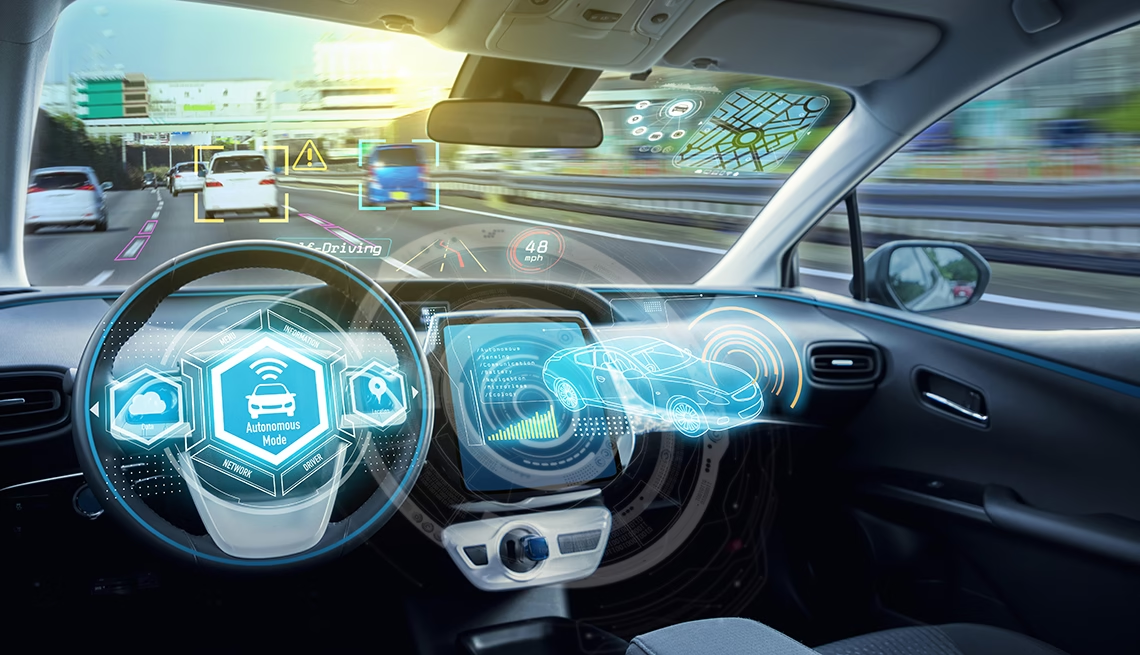
The concept of self-driving cars has been a dream for decades, but how close are we to full automation? With advancements in AI, sensor technology, and connectivity, autonomous vehicles are progressing rapidly. This article explores the current state of self-driving technology, the challenges that remain, and the future of full automation.
1. Understanding Autonomous Driving Technology
1.1 Levels of Autonomous Driving
| Level | Description |
| Level 0 | No automation, human control required. |
| Level 1 | Driver assistance with features like adaptive cruise control. |
| Level 2 | Partial automation, but driver must remain engaged. |
| Level 3 | Conditional automation; system drives, but human intervention needed. |
| Level 4 | High automation in geofenced areas; no human required. |
| Level 5 | Full automation in all conditions. |
1.2 Core Technologies Behind Self-Driving Cars
- Artificial Intelligence (AI): Powers decision-making and route planning.
- LIDAR and Radar Sensors: Detect surroundings and obstacles.
- Computer Vision: Analyzes road signs, traffic lights, and pedestrians.
1.3 AI and Machine Learning in Autonomous Vehicles
- AI processes real-time data from multiple sensors.
- Machine learning improves self-driving capabilities over time.
2. Current State of Self-Driving Cars in 2025
2.1 Leading Companies in Autonomous Vehicle Development
| Company | Key Developments |
| Tesla | Advanced Full Self-Driving (FSD) software |
| Waymo | Operating robotaxi services in select cities |
| Cruise | GM-backed autonomous taxis |
| Baidu Apollo | Expansion of self-driving initiatives in China |
2.2 Real-World Deployments and Testing
- Autonomous taxis operating in limited areas.
- Self-driving delivery robots gaining traction.
- Testing on highways and urban environments.
2.3 Challenges and Limitations
- Weather and road conditions affecting sensor accuracy.
- Ethical dilemmas in accident scenarios.
- High development and regulatory costs.
3. Key Technologies Enabling Full Automation
3.1 LIDAR, Radar, and Computer Vision
- LIDAR creates 3D maps for navigation.
- Radar detects moving objects in poor visibility.
3.2 Advanced Driver Assistance Systems (ADAS)
- Collision avoidance and lane-keeping assist.
- Adaptive cruise control and emergency braking.
3.3 V2X Communication and Smart Infrastructure
- Vehicles communicate with traffic signals and other cars.
- AI-powered traffic management for smoother flow.
3.4 5G and Edge Computing for Autonomous Cars
- 5G enables ultra-fast data transmission.
- Edge computing reduces latency in vehicle decision-making.
4. Regulatory and Safety Considerations
4.1 Global Regulations and Compliance
- Governments developing safety standards for autonomous cars.
- Need for uniform laws across different regions.
4.2 Ethical Dilemmas and Liability Issues
- Who is responsible in case of an accident?
- AI-driven decision-making in critical situations.
4.3 Public Trust and Adoption Challenges
- Consumer concerns over safety and reliability.
- Education on self-driving technology benefits.
5. Future of Fully Autonomous Vehicles
5.1 Predicted Timeline for Level 5 Autonomy
- Experts estimate full automation may be a decade away.
- Initial deployment in controlled environments (e.g., highways, city centers).
5.2 AI and Next-Generation Traffic Management
- AI-powered systems optimize traffic flow.
- Reduced congestion and enhanced road safety.
5.3 Integration of Autonomous Cars with Smart Cities
- Self-driving taxis and public transportation.
- Seamless vehicle-to-infrastructure communication.
Conclusion
While full automation is not yet a reality, self-driving technology continues to evolve rapidly. With advancements in AI, 5G, and smart infrastructure, we are inching closer to a future where autonomous cars dominate the roads. However, challenges in regulation, public trust, and technological limitations must be addressed before Level 5 autonomy becomes widespread.
SEO Tags:
- Self-Driving Cars 2025,
- Autonomous Vehicle Technology,
- Future of Self-Driving Cars,
- AI in Autonomous Vehicles,
- LIDAR and Radar in Self-Driving Cars,
- V2X Communication in Cars,
- 5G and Self-Driving Cars,
- Ethical Issues in Autonomous Cars,
- AI-Powered Traffic Management,
- Smart Cities and Autonomous Vehicles,