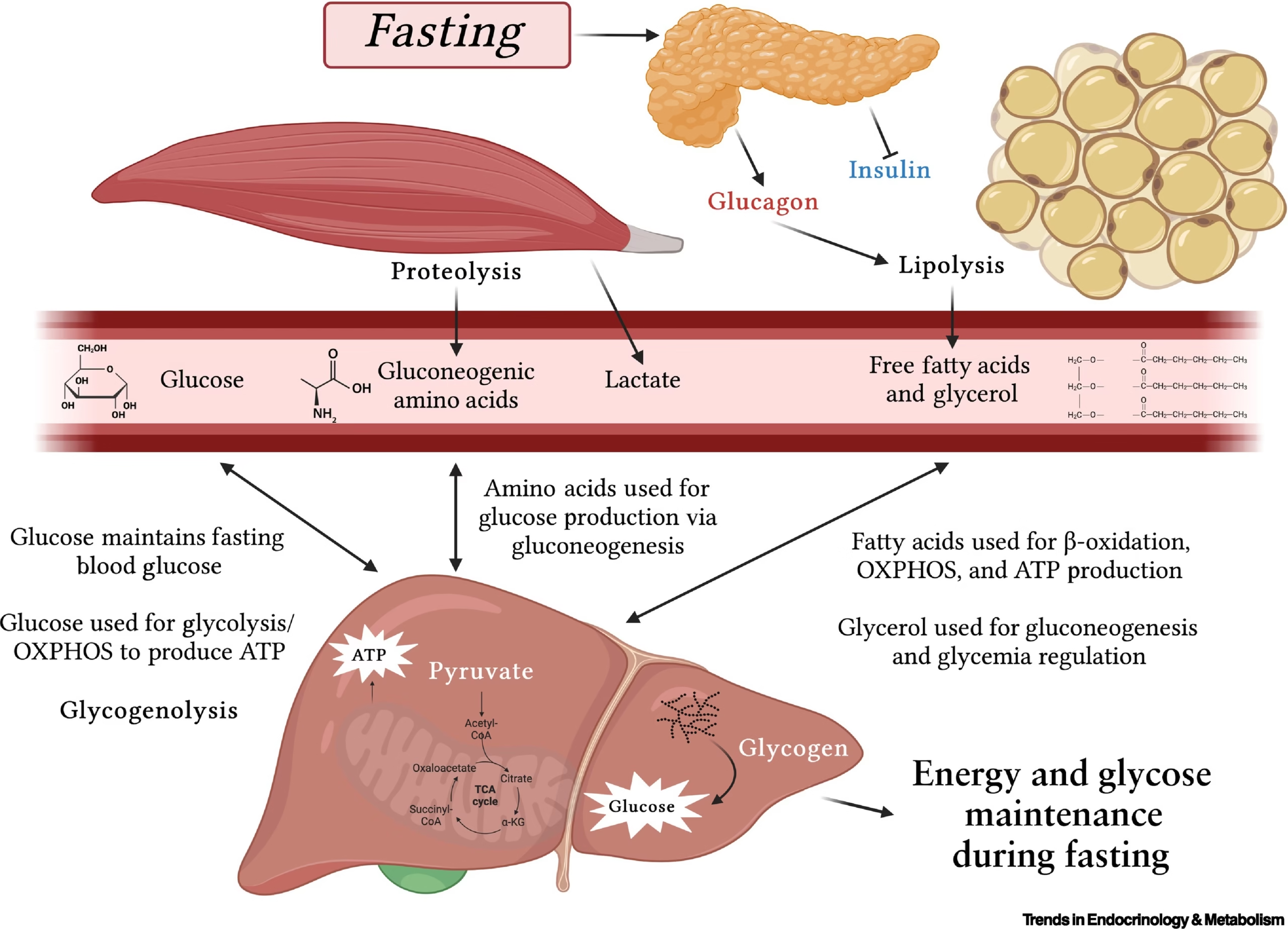
- Introduction
- 1. The Evolution of Intermittent Fasting
- 1.1 Traditional Fasting vs. Modern Approaches
- 1.2 Scientific Breakthroughs in Fasting
- 1.3 The Rise of Personalized Fasting Plans
- 2. The Latest Research on Intermittent Fasting
- 2.1 Effects on Metabolism and Weight Loss
- 2.2 Impact on Longevity and Cellular Health
- 2.3 Fasting and Mental Clarity
- 2.4 How Fasting Affects Gut Health
- 3. Popular Intermittent Fasting Methods in 2025
- 3.1 16:8 Method – The Classic Approach
- 3.2 OMAD (One Meal a Day) – Is It Sustainable?
- 3.3 Alternate-Day Fasting – What’s New?
- 3.4 The 5:2 Diet – Still Effective?
- 3.5 Time-Restricted Eating with Circadian Science
- 4. How Technology is Transforming Fasting
- 4.1 AI-Powered Fasting Apps
- 4.2 Wearable Devices for Metabolic Tracking
- 4.3 Smart Nutrition Planning
- 5. Common Myths and Misconceptions
- 5.1 Fasting Slows Down Metabolism – True or False?
- 5.2 Does Fasting Lead to Muscle Loss?
- 5.3 Fasting vs. Caloric Restriction – Which is Better?
- 6. Future Trends in Intermittent Fasting
- 6.1 Personalized Fasting Based on Genetics
- 6.2 AI-Driven Meal Scheduling
- 6.3 Fasting for Disease Prevention
- Conclusion
Introduction
Intermittent fasting (IF) has undergone significant evolution over the years. With new scientific insights, advancements in health technology, and growing awareness, IF is now more personalized and accessible than ever. In this article, we explore the latest developments, new fasting methods, and how technology is shaping the future of fasting.
1. The Evolution of Intermittent Fasting
1.1 Traditional Fasting vs. Modern Approaches
- Ancient fasting practices were mostly religious or cultural.
- Modern intermittent fasting is backed by scientific research.
- Flexibility in fasting methods makes it easier for individuals to adopt.
1.2 Scientific Breakthroughs in Fasting
- Discovery of autophagy and its role in cellular repair.
- Fasting’s effect on insulin sensitivity and metabolic flexibility.
- The link between fasting and improved cognitive function.
1.3 The Rise of Personalized Fasting Plans
| Feature | Benefit |
| AI-based fasting apps | Personalized meal timing and fasting schedules |
| Blood glucose tracking | Helps determine optimal fasting duration |
| DNA-based fasting | Custom plans based on genetic predisposition |
2. The Latest Research on Intermittent Fasting
2.1 Effects on Metabolism and Weight Loss
- Increases fat oxidation while preserving lean muscle mass.
- Enhances insulin sensitivity, reducing risk of type 2 diabetes.
2.2 Impact on Longevity and Cellular Health
- Activates autophagy, reducing the risk of chronic diseases.
- Supports mitochondrial function for improved energy production.
2.3 Fasting and Mental Clarity
- Increases production of brain-derived neurotrophic factor (BDNF).
- May help reduce symptoms of brain fog and enhance focus.
2.4 How Fasting Affects Gut Health
| Benefit | Description |
| Improves gut microbiome | Encourages healthy bacterial diversity |
| Reduces inflammation | Lowers gut-related inflammatory markers |
| Supports digestion | Enhances nutrient absorption efficiency |
3. Popular Intermittent Fasting Methods in 2025
3.1 Method – The Classic Approach
- 16-hour fasting window, 8-hour eating window.
- Ideal for beginners and long-term adherence.
3.2 OMAD (One Meal a Day) – Is It Sustainable?
- Focuses on consuming all calories in a single meal.
- Requires careful macronutrient planning for proper nutrition.
3.3 Alternate-Day Fasting – What’s New?
- Fasting every other day with modified calorie intake.
- New research supports its benefits for cardiovascular health.
3.4 The 5:2 Diet – Still Effective?
- Five normal eating days, two days of calorie restriction.
- Studies show it aids in weight loss and metabolic health.
3.5 Time-Restricted Eating with Circadian Science
- Aligns fasting schedule with natural body rhythms.
- Enhances sleep and digestion by syncing with circadian cycles.
4. How Technology is Transforming Fasting
4.1 AI-Powered Fasting Apps
- Provides real-time fasting schedules and adjustments.
- Uses machine learning to optimize fasting for individual goals.
4.2 Wearable Devices for Metabolic Tracking
- Continuous glucose monitoring (CGM) to assess fasting benefits.
- Smartwatches track heart rate variability during fasting.
4.3 Smart Nutrition Planning
- AI-driven meal suggestions based on fasting type.
- Integration with diet-tracking apps for optimal macronutrient balance.
5. Common Myths and Misconceptions
5.1 Fasting Slows Down Metabolism – True or False?
- Research shows short-term fasting may boost metabolism.
- Prolonged fasting should be done under supervision.
5.2 Does Fasting Lead to Muscle Loss?
- Proper protein intake during eating windows preserves muscle.
- Strength training alongside fasting minimizes muscle breakdown.
5.3 Fasting vs. Caloric Restriction – Which is Better?
| Method | Key Benefit |
| Intermittent Fasting | Enhances insulin sensitivity and metabolic flexibility |
| Caloric Restriction | Reduces overall calorie intake without time restrictions |
6. Future Trends in Intermittent Fasting
6.1 Personalized Fasting Based on Genetics
- DNA analysis to determine the best fasting approach for individuals.
- Helps customize fasting protocols for different body types.
6.2 AI-Driven Meal Scheduling
- Predicts optimal eating windows based on metabolic rate.
- Adjusts fasting plans dynamically based on user data.
6.3 Fasting for Disease Prevention
- Research suggests fasting may lower risks of neurodegenerative diseases.
- Ongoing studies on fasting’s role in preventing cancer and autoimmune disorders.
Conclusion
Intermittent fasting has evolved significantly with scientific advancements, technology integration, and personalized approaches. Whether for weight loss, longevity, or mental clarity, fasting continues to be a powerful health tool in 2025.