- Introduction
- 1. The Role of AI in Modern Healthcare
- 1.1 Understanding AI in Healthcare
- 1.2 Evolution of AI in Medical Diagnostics
- 2. Key AI Technologies Transforming Diagnostics
- 2.1 Machine Learning and Deep Learning
- 2.2 Natural Language Processing (NLP)
- 2.3 Computer Vision and Imaging Technologies
- 2.4 AI-Powered Predictive Analytics
- 3. Applications of AI in Healthcare Diagnostics
- 3.1 AI in Radiology and Medical Imaging
- 3.2 AI for Pathology and Lab Testing
- 3.3 AI in Genetic and Precision Medicine
- 3.4 AI-Assisted Diagnosis in Primary Care
- 3.5 AI for Early Detection of Diseases
- 4. Benefits of AI in Healthcare Diagnostics
- 5. Challenges and Ethical Considerations
- 6. Future Trends in AI-Powered Diagnostics
Conclusion
Introduction
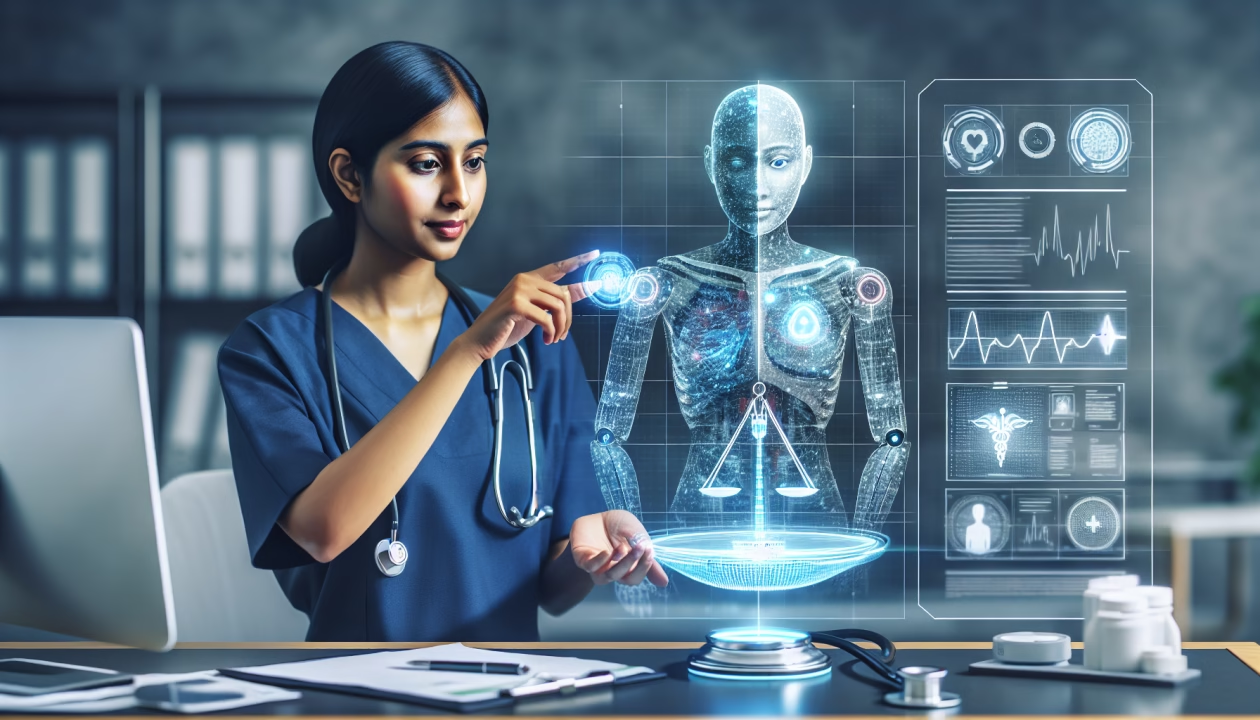
Artificial intelligence (AI) is transforming the healthcare industry, especially in diagnostics. With advanced machine learning, deep learning, and image processing techniques, AI improves diagnostic accuracy, speeds up disease detection, and enhances patient outcomes. This article explores how AI is revolutionizing healthcare diagnostics.
1. The Role of AI in Modern Healthcare
1.1 Understanding AI in Healthcare
- AI refers to the use of algorithms and computational models to analyze medical data and assist in decision-making.
- It enhances clinical workflows by automating repetitive tasks and providing real-time insights.
1.2 Evolution of AI in Medical Diagnostics
- Early AI models were rule-based and limited in capability.
- Modern AI leverages deep learning to analyze complex medical datasets with high accuracy.
2. Key AI Technologies Transforming Diagnostics
2.1 Machine Learning and Deep Learning
- AI models learn from vast medical datasets to improve diagnostic precision.
- Deep learning enables AI to recognize patterns in imaging and lab reports.
2.2 Natural Language Processing (NLP)
- NLP extracts valuable insights from unstructured medical records.
- AI-powered chatbots assist doctors by summarizing patient histories.
2.3 Computer Vision and Imaging Technologies
- AI enhances medical imaging analysis for conditions like tumors and fractures.
- Automated image recognition speeds up radiology interpretations.
2.4 AI-Powered Predictive Analytics
- AI forecasts disease progression and potential health risks.
- Predictive models improve early diagnosis and preventive care.
3. Applications of AI in Healthcare Diagnostics
3.1 AI in Radiology and Medical Imaging
| Application | Impact |
| AI-assisted MRI and CT scans | Faster and more accurate diagnoses |
| X-ray analysis | Identifies anomalies with high precision |
| Mammography screening | Early breast cancer detection |
3.2 AI for Pathology and Lab Testing
- AI detects abnormalities in blood tests and tissue samples.
- Automates analysis of microscopic slides for diseases like cancer.
3.3 AI in Genetic and Precision Medicine
- AI identifies genetic markers for personalized treatments.
- Helps tailor drug prescriptions based on genetic data.
3.4 AI-Assisted Diagnosis in Primary Care
- AI-powered virtual assistants help doctors analyze symptoms.
- Reduces misdiagnosis rates by cross-referencing patient data.
3.5 AI for Early Detection of Diseases
- AI detects early signs of diseases like Alzheimer’s and Parkinson’s.
- Enhances predictive models for chronic illness management.
4. Benefits of AI in Healthcare Diagnostics
- Increased Accuracy: AI reduces human error in diagnosis.
- Faster Diagnoses: Automated analysis speeds up decision-making.
- Cost Reduction: AI lowers healthcare expenses by optimizing workflows.
- Improved Accessibility: AI-powered diagnostics reach remote areas.
5. Challenges and Ethical Considerations
| Challenge | Impact |
| Data privacy | Concerns over patient data security |
| AI bias | Potential inaccuracies due to biased datasets |
| Regulatory hurdles | Need for standardized AI approval processes |
6. Future Trends in AI-Powered Diagnostics
- Integration of AI with Wearable Technology.
- Expansion of AI in Drug Discovery and Clinical Trials.
- Advancements in AI-driven Robotic Surgery.
Conclusion
AI is revolutionizing healthcare diagnostics by improving accuracy, efficiency, and accessibility. As AI continues to evolve, it will play a crucial role in early disease detection, precision medicine, and enhanced patient care, shaping the future of modern healthcare.