- Introduction
- 1. What is 5G?
- 2. What is 6G?
- 3. Key Differences Between 5G and 6G
- 4. Technological Advancements in 6G
- 4.1 Terahertz (THz) Frequency
- 4.2 AI-Driven Network Optimization
- 4.3 Holographic Communication & XR Integration
- 5. Impact of 6G on Various Industries
- 5.1 Healthcare
- 5.2 Smart Cities
- 5.3 Autonomous Vehicles
- 5.4 AI and IoT Devices
- 6. Challenges in the Development of 6G
- 7. When Will 6G Be Available?
Conclusion
Introduction
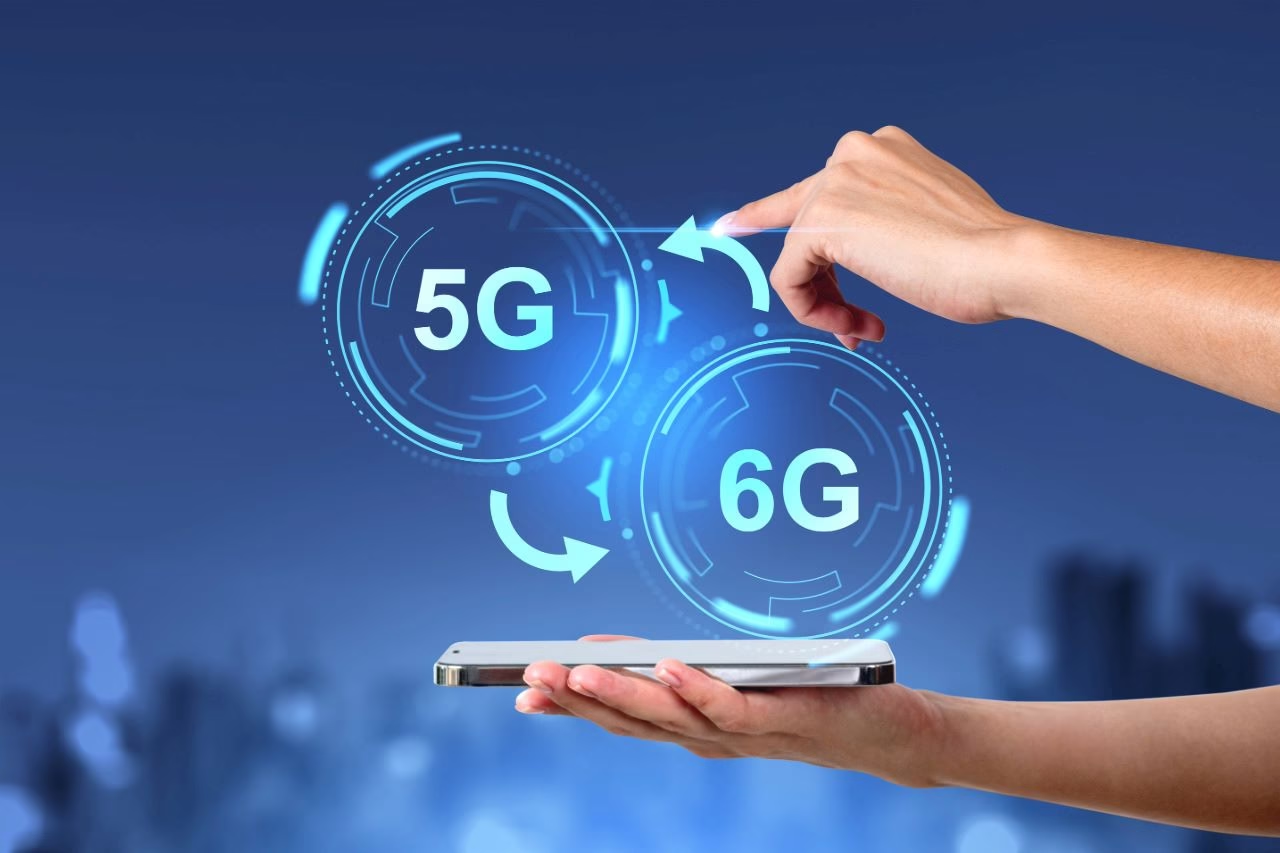
The evolution from 5G to 6G represents a significant leap in telecommunications. While 5G is already transforming industries with its high-speed connectivity, 6G is expected to revolutionize communication with terahertz frequencies, ultra-low latency, and AI-powered optimizations. This article explores the differences between 5G and 6G, their technological advancements, and their impact on various industries.
1. What is 5G?
5G, the fifth-generation wireless technology, offers enhanced speed, ultra-low latency, and massive device connectivity, enabling:
- Faster internet speeds (up to 10 Gbps).
- Improved network reliability.
- Support for IoT and smart city applications.
2. What is 6G?
6G, the upcoming sixth-generation network, is expected to offer speeds up to 100 times faster than 5G, utilizing AI and THz frequencies to:
- Enable real-time holographic communication.
- Improve AI-driven automation.
- Support ultra-high-speed wireless data transmission.
3. Key Differences Between 5G and 6G
| Feature | 5G | 6G |
| Speed | Up to 10 Gbps | Up to 1 Tbps |
| Latency | 1 ms | <0.1 ms |
| Frequency | Sub-6 GHz, mmWave | Terahertz (THz) |
| AI Integration | Basic automation | Full AI-driven networks |
| Connectivity Density | Supports IoT & smart cities | Advanced machine-to-machine (M2M) communication |
| Applications | AR/VR, autonomous vehicles | Holographic telepresence, quantum communication |
4. Technological Advancements in 6G
4.1 Terahertz (THz) Frequency
6G will operate in the terahertz spectrum, offering:
- Higher data transmission speeds.
- Enhanced spectral efficiency.
- Low power consumption for IoT devices.
4.2 AI-Driven Network Optimization
AI will play a crucial role in optimizing 6G networks by:
- Predicting network congestion.
- Automating bandwidth allocation.
- Enhancing cybersecurity.
4.3 Holographic Communication & XR Integration
- Real-time holographic meetings.
- Enhanced extended reality (XR) experiences.
- Seamless virtual and augmented reality applications.
5. Impact of 6G on Various Industries
5.1 Healthcare
- Remote surgeries with near-zero latency.
- AI-powered diagnostics with instant data transfer.
- Smart medical devices for real-time health monitoring.
5.2 Smart Cities
- AI-driven traffic management.
- Smart grids for energy efficiency.
- Real-time disaster monitoring.
5.3 Autonomous Vehicles
- Faster vehicle-to-everything (V2X) communication.
- Improved real-time navigation and safety.
- Reduced latency for self-driving cars.
5.4 AI and IoT Devices
- Seamless machine-to-machine (M2M) communication.
- AI-powered automation in industries.
- Enhanced consumer electronics connectivity.
6. Challenges in the Development of 6G
| Challenge | Description |
| Infrastructure | Requires new base stations and satellites |
| Cost | High R&D and deployment costs |
| Security | Need for quantum-resistant encryption |
| Energy Consumption | Requires efficient power management |
7. When Will 6G Be Available?
6G is expected to be commercially available by 2030, with early trials and research currently underway in countries like the U.S., China, and South Korea.
Conclusion
While 5G is still being deployed worldwide, 6G promises even more revolutionary advancements in connectivity, AI integration, and real-time communication. Although challenges remain, the future of wireless technology is set to bring unprecedented changes across industries and everyday life.